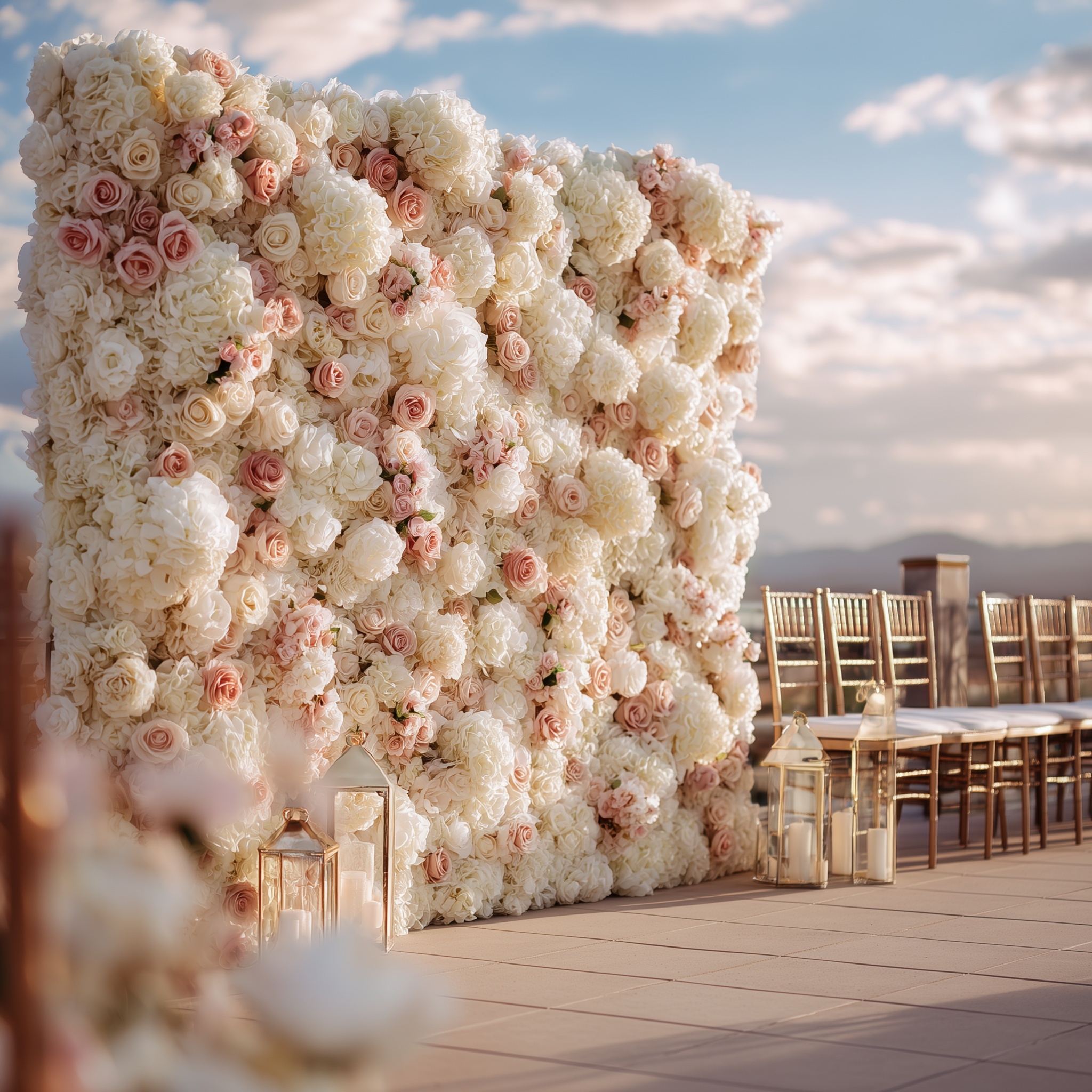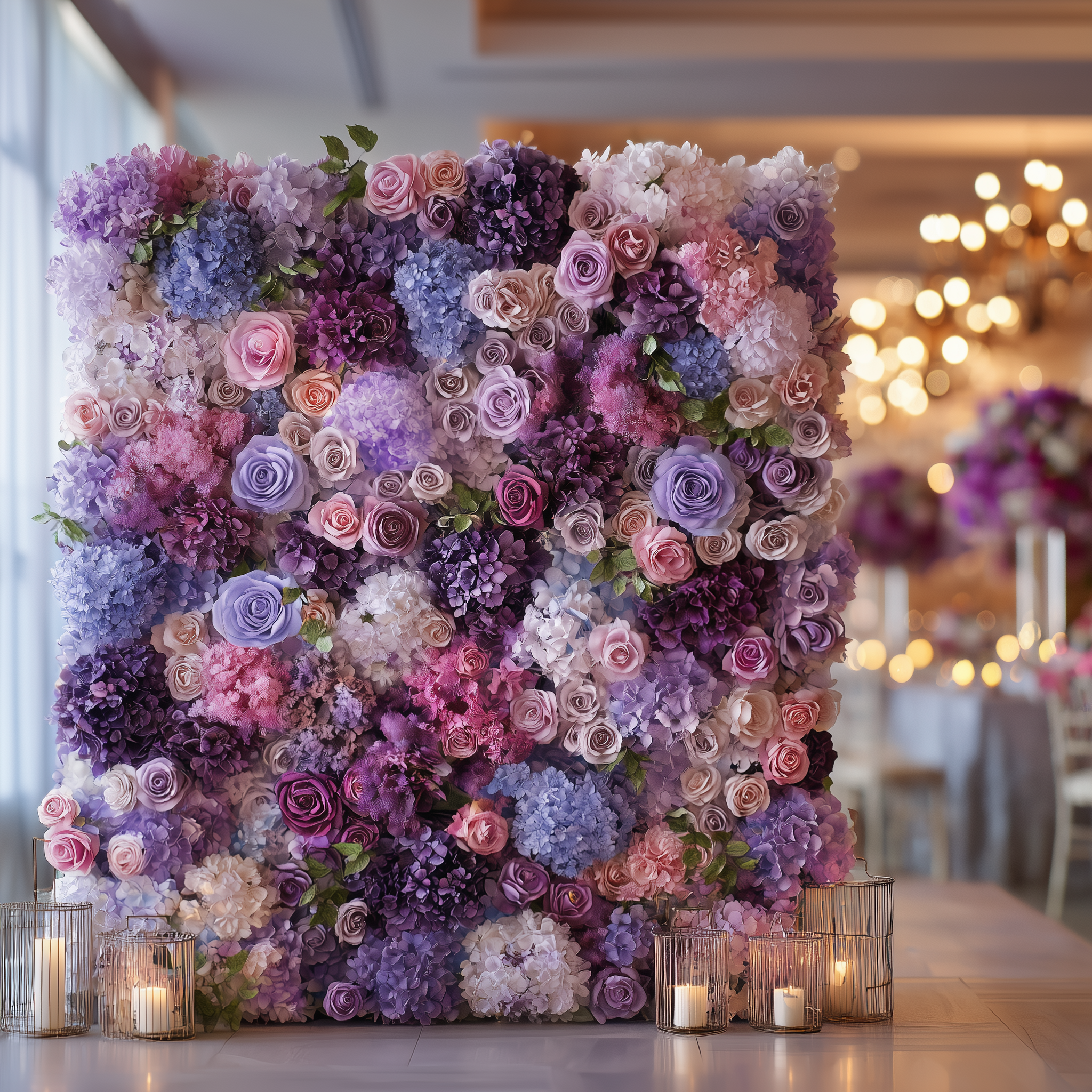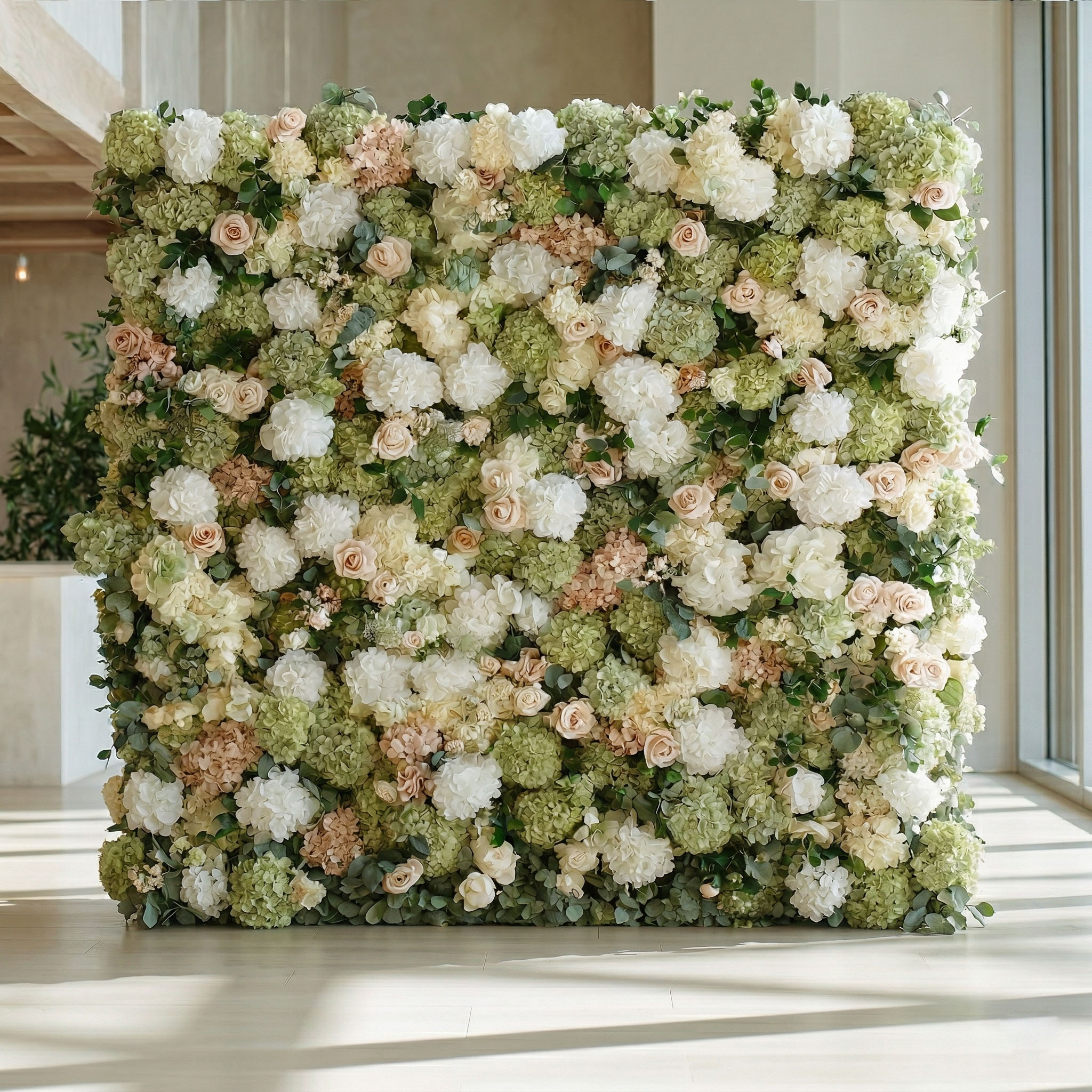
When you're comparing flower wall rentals in Toronto, vendors use "silk" and "Real Touch" as if the terms explain themselves. Most rental listings don't specify which material they use — and when they do, they rarely say why it matters. By the time you see the wall at your venue, you've already signed the contract.
This article breaks down what these two materials actually are, how they behave in person and in photographs, and what questions to ask before committing to a rental.
The Two Types of Artificial Flowers Nobody Explains
The artificial flower market divides broadly into two manufacturing approaches: fabric-based flowers (commonly called "silk") and cast-polymer flowers (called "Real Touch," "latex," or "PU"). These are not quality tiers of the same technology — they are different materials with different properties, produced through different processes.
The confusion persists because vendors apply terms like "premium" and "realistic" to both categories without specifying which one they mean. Price alone doesn't resolve the question: a rental quote can be high for reasons unrelated to the flowers themselves — delivery radius, setup time, peak-season premium. Understanding the material is the only reliable way to know what you're actually booking.
Silk Flowers: Why They Photograph Well but Disappoint Up Close
Despite the name, most flowers sold or rented as "silk" contain no natural silk. They are manufactured from woven synthetic fabrics — polyester, nylon, or polypropylene — cut into petal shapes and heat-pressed to hold a form. "Silk" in the artificial flower industry is a holdover from an earlier era of production. Today it functions as a generic category name rather than a material description.
In a wide-angle photograph taken under consistent lighting, a silk flower wall can look convincing. The shapes read correctly, the colours are saturated, and the volume carries well from three or more metres. Used as a wedding backdrop at the back of a reception hall, silk walls do their job. The limitation appears at closer range.
Woven fabric has an inherent surface structure — a weave that catches and reflects light differently depending on angle. On silk flowers, this produces a characteristic sheen: slightly glossy, with a faint laminated quality that real petals don't have. In direct light or flash photography, this quality can create a flat or artificial-looking highlight across sections of the wall. In ambient or mixed light, the effect is subtler but still present.
Two other details identify fabric flowers at close range. First, silk petals tend to have uniform edges — slightly stiff, with a consistent curl pattern that comes from the heat-pressing process. Real flower petals have organic, irregular edges. Second, fabric flowers rustle. When guests move near the wall, or when air circulation runs through the venue, there is a faint but audible fabric sound. It is a minor detail in a loud room; at a quiet ceremony, it registers.
None of this disqualifies silk walls entirely. For large-scale room installations, ceremony backdrops used at a distance, or events where the rental budget is the primary constraint, silk walls deliver consistent colour and reasonable volume. The limitation is a ceiling — one that becomes visible the moment a guest steps close enough to look carefully, or reaches out to touch a petal.
Real Touch (Latex/PU): How It Mimics Real Petals
Real Touch is a manufacturing category, not a brand name or marketing phrase. The defining characteristic is the production method: each petal is individually cast from a latex or polyurethane (PU) compound, producing a surface that is matte, slightly cool to the touch, and flexible in a way that closely mimics how real flower petals flex and recover.
Where fabric petals resist pressure uniformly and spring back in one motion, a Real Touch petal has graduated stiffness — firmer at the base, more yielding at the edge — with a slow elastic recovery that matches organic material. This is a tactile property that photographs don't capture well, which is partly why it goes underexplained in most rental marketing.
The surface finish differs from fabric at a fundamental level. Latex and polyurethane moulding produces a slight grain that mimics the microscopic texture of a real petal surface. There is no visible weave. In natural light, a Real Touch petal reflects light with subtle variation across its surface — some areas slightly more matte, others catching more light — which is how real petals behave. A silk petal produces a more uniform, higher-contrast reflection.
Weight is a practical difference as well. Real Touch flowers are denser than equivalent faux flowers made from woven fabric. A full Real Touch wall has a different presence — not heavy, but substantive. When the air moves, a Real Touch wall does not rustle. Individual petals shift slightly and settle, which is the behaviour of real flowers. For events near ventilation sources, or for any outdoor setup, this distinction is audible.
Side-by-Side Comparison
| Attribute | Silk (woven fabric) | Real Touch (latex/PU) |
|---|---|---|
| Look from 3+ metres | Convincing; colours vivid | Convincing; colours natural |
| Look up close | Visible fabric weave; uniform petal edges | Matte grain; organic, irregular petal edges |
| Surface finish | Characteristic sheen; reflects light uniformly | Matte; varied light reflection like real petals |
| To the touch | Smooth fabric; uniform resistance | Slightly cool; graduated flex; slow recovery |
| In flash photography | Can produce flat highlights across the surface | Behaves like real petals under flash |
| Sound when disturbed | Audible fabric rustle | Silent |
| Production cost | Lower; fabric cutting scales efficiently | Higher; individual casting and hand-finishing |
The "Guest Test": What Happens When People Touch the Wall
At almost every event, someone reaches out to touch the flowers. Sometimes it's a guest who wants to confirm what they're seeing. Sometimes it's a child. Sometimes it's a photographer adjusting a bloom before a portrait. A flower wall is a focal point — the most-photographed surface at the event — and proximity naturally follows.
At FLORINSKY events, this moment happens consistently. The response from guests is not "oh, it's fake." It is closer to the opposite: guests approach because the wall looks detailed enough that they want to know. They come closer specifically to smell the flowers. When they touch a Real Touch petal — matte, slightly cool, with that characteristic give at the edge — the first reaction is usually surprise, followed by a closer look, and then a comment to whoever is standing nearby.
That moment is part of the event experience. A wall that holds up to scrutiny becomes a conversation piece. With a fabric wall, the visual identification at closer range is quicker, and the moment ends differently.
How to Tell What You're Actually Renting
"Premium" and "realistic" are used broadly in rental marketing. These three questions produce more specific answers:
- Are the flowers Real Touch — meaning latex or polyurethane construction — or woven fabric (polyester/nylon)? This should have a one-sentence answer. Responses like "high-quality artificial" or "premium silk" without naming the material almost always mean fabric flowers.
- Can I see a close-up photograph of a single bloom, not a wide shot of the full wall? Close-up images reveal surface texture, petal edge quality, and finish that wide shots conceal entirely.
- Is the wall available to view before the event date? A showroom visit or early venue access answers the tactile question definitively — no description substitutes for the real thing.
The pricing context is worth understanding. Real Touch manufacturing is materially more expensive than fabric flower production. Each bloom is individually cast and hand-finished; the process doesn't scale the same way as automated fabric cutting. Rental operations with very low day rates are generally not absorbing that production cost — and that is a straightforward economic reality rather than a quality judgment. The material economics make genuine Real Touch walls less accessible at budget price points.
To see close-up examples of Real Touch construction used at events across the GTA, the FLORINSKY event gallery shows actual wall photography from recent bookings. For a detailed account of the material decision itself, why we chose Real Touch for every FLORINSKY wall covers the reasoning behind the choice.
FAQ
Are Real Touch flowers waterproof for outdoor events?
Real Touch flowers — cast from latex or polyurethane — are significantly more moisture-resistant than fabric flowers. The cast polymer surface doesn't absorb water the way woven fabric does, and the petals hold their shape through light moisture and humidity. For outdoor events in direct rain, providing some shelter for the wall is still advisable, but a Real Touch wall recovers from brief moisture exposure better than a silk equivalent would.
Do Real Touch flower walls cost more to rent?
Yes, typically. The production cost of Real Touch flowers is higher than fabric flowers, and that carries through to rental pricing. When two rental quotes differ significantly and both describe their walls as "premium," the material is usually the explanation for the price gap. Asking vendors to name the material directly — latex, polyurethane, or fabric — is the fastest way to understand what each quote actually includes.
Can guests tell the flowers are artificial?
At distance, guests rarely distinguish a Real Touch wall from fresh flowers. Up close, most guests cannot identify the flowers as artificial on sight alone — the question usually arises from touching the wall rather than looking at it. The consistent report from FLORINSKY events is that guests approach close enough to smell the flowers before registering that they're not fresh. With a fabric wall, the visual identification at closer range tends to be quicker.
What are silk flowers actually made of?
Despite the name, most flowers sold or rented as "silk" are made from synthetic woven fabrics — polyester, nylon, or polypropylene. Natural silk is occasionally used in high-end decorative floristry, but it is uncommon in event rental inventory. "Silk" in rental contexts is effectively a category name for woven-fabric artificial flowers, covering a wide range of materials and quality levels.